Your heart races. Your chest feels tight. Your mind won’t stop spinning with worried thoughts about everything that could go wrong. Sound familiar? You’re not alone. More than 40 million Americans deal with anxiety disorders, and millions more experience everyday stress that makes life feel overwhelming.
I’ve been teaching yoga for over 15 years, and I can’t count how many students have walked into my studio looking exhausted and worried, only to leave an hour later with relaxed shoulders and peaceful smiles. That transformation never gets old. The best part? You don’t need to be flexible, spiritual, or experienced to use yoga for anxiety relief. You just need to show up and breathe.
In this guide, I’ll walk you through everything you need to know about using yoga to calm your anxious mind. We’ll explore the science behind why it works, the best poses for quick relief, breathing techniques you can use anywhere, and how to create a simple practice that fits your life. Whether you’re dealing with constant worry or occasional panic, these tools can help you find your calm again.
Understanding Anxiety and Why Yoga Actually Helps
Before we jump into poses and practices, let’s talk about what’s happening in your body when anxiety takes over.
Anxiety isn’t just in your head. When you’re anxious, your body kicks into fight or flight mode. Your heart pounds faster. Your breathing becomes shallow and quick. Your muscles tense up. Your mind races. This is your nervous system trying to protect you from danger, even when there’s no real threat.
The problem? Most of us live in this stressed state way too often. Your body gets stuck in high alert mode, and that constant tension wears you down physically and mentally.
This is where yoga comes in as a game changer.
Yoga works with your nervous system in a way that regular exercise doesn’t. When you move slowly through poses while focusing on your breath, you send a clear message to your brain that you’re safe. This activates your parasympathetic nervous system, which is basically your body’s built in relaxation switch.
Research backs this up. Studies show that regular yoga practice reduces cortisol levels (that’s your main stress hormone). It also increases GABA, a brain chemical that helps you feel calm and peaceful. One study from Boston University found that people who practiced yoga had significantly less anxiety than those who just did regular walking exercises.
But here’s what I find most powerful about yoga for stress and anxiety: it teaches you to notice what’s happening in your body without panicking about it. You learn to breathe through discomfort. You practice staying present instead of spinning out into worried thoughts about the future. These skills don’t just help on your yoga mat. They change how you handle stressful moments throughout your day.
The Best Types of Yoga for Calming Your Mind
Not all yoga is created equal when it comes to anxiety relief. Some styles will calm you down, while others might actually ramp you up.
Hatha Yoga is perfect if you’re new to yoga or feeling really anxious. Classes move slowly, giving you time to settle into each pose and focus on your breathing. There’s no pressure to keep up with complicated sequences.
Restorative Yoga is like a massage for your nervous system. You’ll hold gentle poses for 5 to 10 minutes using props like blankets and bolsters to support your body. It feels incredibly nurturing, especially when anxiety has left you feeling exhausted.
Yin Yoga involves holding poses for several minutes to release deep tension in your connective tissues. It’s quiet and meditative, giving your mind space to settle down. Fair warning: it can bring up emotions, which is actually therapeutic but might feel intense at first.
Gentle Vinyasa links movement with breath in a flowing sequence. The rhythmic quality can be very soothing, almost like a moving meditation. Just make sure the class is labeled “gentle” because regular vinyasa can be too fast paced when you’re anxious.
Yoga Nidra is guided relaxation that some people call yogic sleep. You lie down while a teacher talks you through body awareness and visualization. It’s deeply restful and perfect for those nights when anxiety keeps you awake.
Here’s what I tell my anxious students to avoid or approach carefully: hot yoga and power yoga. The heat and intensity can feel overwhelming when your nervous system is already on edge. That doesn’t mean they’re bad, just that they’re not the best starting point for anxiety relief.
The most important thing? Listen to your body. If a class makes you feel more stressed, that’s valuable information. Try a different style or teacher.
10 Powerful Yoga Poses for Anxiety Relief
These poses specifically target the physical symptoms of anxiety while helping your mind find stillness. I’ve arranged them from most accessible to slightly more challenging, but you can do them in any order that feels right.
1. Child’s Pose (Balasana)
This is my go to pose when everything feels like too much. Child’s Pose gently compresses your belly, which stimulates your vagus nerve and tells your body to relax.
Kneel on your mat with your big toes touching and knees spread apart. Sit back on your heels and fold forward, resting your forehead on the ground. Stretch your arms out in front of you or rest them alongside your body, whatever feels better.
Stay here for at least one minute, breathing deeply into your back. If your forehead doesn’t reach the floor comfortably, stack your fists or use a pillow. If sitting on your heels hurts your knees, place a rolled towel behind them.
2. Legs Up the Wall (Viparita Karani)
This pose literally changes the direction of blood flow in your body, giving your heart a break and calming your entire system. It’s like pressing a reset button.
Sit sideways against a wall, then swing your legs up as you lie back. Your body should form an L shape with your legs resting against the wall. Scoot your hips as close to the wall as comfortable. Rest your arms out to the sides, palms facing up.
Close your eyes and stay for 5 to 15 minutes. This is an excellent pose to do before bed when anxiety is keeping you awake. Put on some calm music and just let gravity do the work.
3. Cat Cow Pose (Marjaryasana Bitilasana)
The gentle rocking motion of Cat Cow releases tension in your spine and creates a soothing rhythm with your breath. It’s simple but surprisingly powerful for shifting your mental state.
Start on your hands and knees with your wrists under your shoulders and knees under your hips. As you breathe in, drop your belly and lift your chest and tailbone (that’s Cow). As you breathe out, round your spine and tuck your chin toward your chest (that’s Cat).
Move slowly back and forth for 10 to 15 rounds, matching each movement to your breath. Don’t rush this. The point is to create a steady, calming rhythm. If your wrists hurt, try doing this on your forearms instead.
4. Standing Forward Bend (Uttanasana)
Forward bends have a naturally calming effect on your nervous system. This one also releases tight hamstrings and lower back tension that often comes with chronic stress.
Stand with your feet hip width apart. Bend your knees generously (seriously, bend them a lot). Fold forward from your hips, letting your upper body hang heavy. You can hold opposite elbows or let your hands dangle toward the ground.
Let your head hang completely. Nod yes and shake your head no to release neck tension. Stay for one to two minutes, breathing slowly. When you come up, do it slowly to avoid getting dizzy.
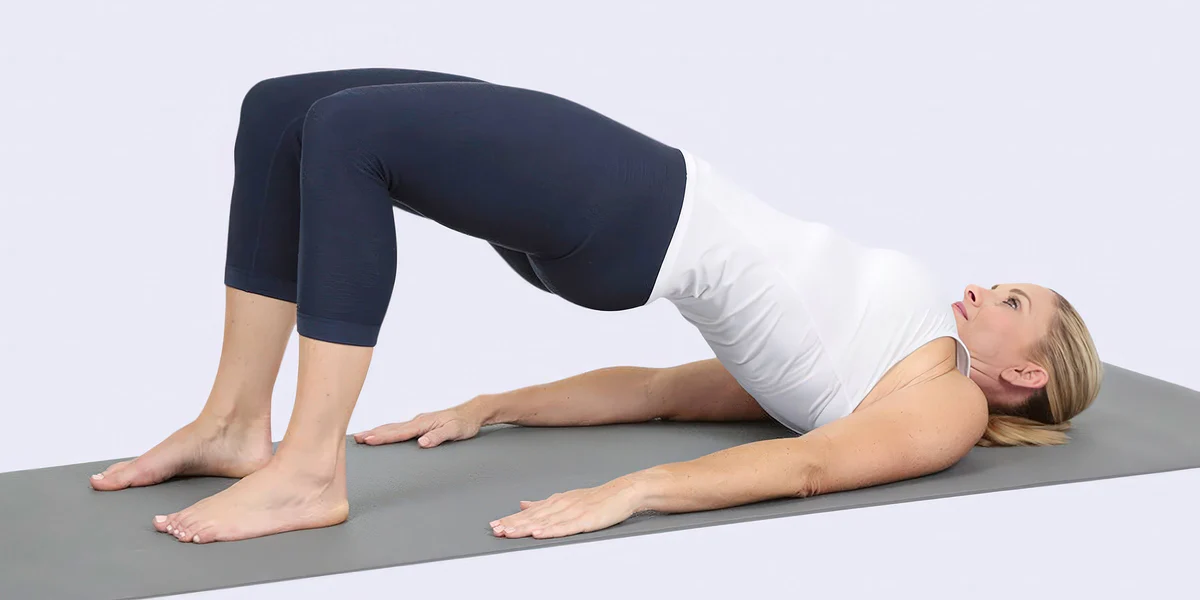
5. Bridge Pose (Setu Bandhasana)
Anxiety often makes us hunch forward, collapsing our chest and making breathing harder. Bridge Pose opens your chest and counteracts that anxious posture.
Lie on your back with your knees bent and feet flat on the floor, hip width apart. Your feet should be close enough to your hips that you can almost touch your heels with your fingertips. Press into your feet and lift your hips toward the ceiling.
You can clasp your hands under your back or keep your arms alongside your body. Hold for 30 seconds to one minute, breathing deeply into your chest. Lower down slowly and rest for a few breaths before repeating if you’d like.
If this feels too intense, just lift your hips a little bit. Even a small lift gives you the benefits.
6. Reclined Bound Angle Pose (Supta Baddha Konasana)
This restorative pose opens your hips (where we store a lot of emotional tension) and your chest, making it easier to breathe fully.
Lie on your back and bring the soles of your feet together, letting your knees fall open to the sides. Place your hands on your belly or out to the sides. If your hips or groin feel strained, put pillows or yoga blocks under each knee for support.
This pose is meant to be completely comfortable, so use as many props as you need. Stay for 3 to 5 minutes, focusing on slow, deep breathing. Notice if you can soften a little more with each exhale.
7. Seated Forward Fold (Paschimottanasana)
Forward folds encourage introspection and calm. This seated version stretches your entire back body while giving you a chance to turn inward and quiet your mind.
Sit with your legs extended in front of you. Flex your feet so your toes point toward the ceiling. Breathe in and lengthen your spine. Breathe out and fold forward from your hips, reaching for your feet, ankles, or shins (wherever you can reach comfortably).
Keep your spine long rather than rounding your back. It’s not about touching your toes. It’s about the gentle stretch and the meditative quality of folding inward. Hold for one to three minutes.
If your hamstrings are tight, sit on a folded blanket and bend your knees as much as you need to.
8. Eagle Pose (Garudasana)
This balancing pose requires so much focus that it gives your worried mind a break. You simply can’t think about your to do list when you’re trying not to fall over.
Stand on your right foot and wrap your left thigh over your right thigh. If you can, hook your left foot behind your right calf. Wrap your right arm under your left arm and try to press your palms together. Bend your standing knee slightly.
Focus on a spot in front of you and breathe steadily. Hold for 30 seconds to one minute, then switch sides. If the arm position is too complicated, just give yourself a hug instead. The leg balance alone will still give you the mental focus benefits.
9. Tree Pose (Vrksasana)
Another balancing pose that grounds you in the present moment. There’s something about standing on one foot that makes you feel strong and centered.
Stand on your left foot and place your right foot on your inner left ankle, calf, or thigh (never directly on your knee). Press your hands together at your chest or reach them overhead if you feel steady.
Find something to look at that isn’t moving. Breathe slowly and notice how you make tiny adjustments to stay balanced. That’s your body and mind working together in real time. Hold for 30 seconds to one minute on each side.
If you’re wobbling all over the place, that’s totally normal. Stand near a wall you can touch for support.
10. Corpse Pose (Savasana)
This is the most important pose for anxiety relief, yet people often skip it. Don’t. This final relaxation is where your nervous system integrates all the calming benefits of your practice.
Lie flat on your back with your legs extended and arms resting alongside your body, palms facing up. Close your eyes. Let your feet fall open naturally. Relax completely.
Stay here for at least 5 minutes, longer if possible. If your mind starts racing, just notice it without judgment and bring your attention back to your breath or the feeling of your body on the floor.
Some people feel vulnerable lying on their backs. If that’s you, bend your knees with feet flat on the floor, or cover yourself with a blanket. Do whatever helps you feel safe enough to relax.
Breathing Techniques for Instant Calm
Your breath is the fastest way to shift from anxious to calm. These breathing exercises for anxiety work in minutes and you can do them anywhere without anyone noticing.
Belly Breathing (Diaphragmatic Breathing)
Most anxious people breathe shallowly into their chest. Belly breathing retrains you to breathe deeply and fully.
Place one hand on your chest and one on your belly. Breathe in slowly through your nose, letting your belly expand like a balloon (your chest should barely move). Breathe out through your nose, letting your belly deflate.
Practice this for 5 to 10 minutes. At first it might feel weird or forced, but stick with it. This is how babies breathe naturally. You’re just remembering what your body already knows.
The 4 7 8 Breath
This technique is incredibly powerful for stopping anxiety in its tracks. It works so well because the long exhale activates your relaxation response.
Breathe in quietly through your nose for 4 counts. Hold your breath for 7 counts. Breathe out completely through your mouth for 8 counts, making a whooshing sound. That’s one cycle. Repeat for 4 cycles total.
Use this before bed, during panic attacks, or anytime you feel anxiety rising. It might make you feel a little lightheaded at first, which is normal. Just go slow.
Alternate Nostril Breathing (Nadi Shodhana)
This balancing breath calms your mind and evens out your energy. It sounds complicated but it’s actually quite simple once you try it.
Use your right thumb to close your right nostril. Breathe in through your left nostril. Close your left nostril with your ring finger, release your thumb, and breathe out through your right nostril. Breathe in through your right nostril. Close it with your thumb and breathe out through your left nostril. That’s one round.
Continue for 5 to 10 rounds. This is especially helpful when you feel scattered or overwhelmed.
Box Breathing
Navy SEALs use this technique to stay calm under extreme pressure. If it works for them, it can work for your anxiety too.
Breathe in for 4 counts. Hold your breath for 4 counts. Breathe out for 4 counts. Hold empty for 4 counts. That’s one box. Continue for several minutes.
You can adjust the count to whatever feels comfortable. The key is making all four sides of the box equal.
Extended Exhale Breathing
The simplest and most effective breath for anxiety: just make your exhale longer than your inhale. That’s it.
Breathe in for 3 counts. Breathe out for 6 counts. Adjust the numbers to fit your lung capacity, but always keep the exhale at least twice as long as the inhale.
Do this for 5 to 10 minutes whenever you feel stress building. You can do it during meetings, in traffic, or anywhere you need to calm down fast.
Creating Your Personal Practice
You don’t need an hour long yoga class to get benefits. Even 10 minutes a day can significantly reduce anxiety if you’re consistent.
Start where you are. If you’re new to yoga, begin with just three poses: Child’s Pose, Cat Cow, and Legs Up the Wall. Do these for 10 minutes every morning or evening. That’s enough to start shifting your nervous system.
The best time to practice depends on your anxiety patterns. If you wake up anxious, do some gentle stretches and breathing exercises first thing. If anxiety builds throughout your day, practice when you get home from work. If racing thoughts keep you awake, do restorative poses before bed.
Consistency matters more than duration. Ten minutes every day beats one 90 minute class per week for anxiety relief. Your nervous system needs regular reminders that it’s safe to relax.
Here’s a simple 20 minute sequence you can do at home:
Start with 2 minutes of belly breathing while sitting comfortably. Move into Cat Cow for 2 minutes. Do Standing Forward Bend for 1 minute. Come to your mat for Bridge Pose (hold for 1 minute). Rest on your back for 30 seconds. Move into Reclined Bound Angle Pose for 3 minutes. Roll to one side and come into Child’s Pose for 2 minutes. Finish with Legs Up the Wall for 5 minutes, then Corpse Pose for at least 3 minutes.
Props make everything better and more comfortable. You need a yoga mat (or a soft rug), at least one blanket, and pillows. If you want to invest a bit more, get two yoga blocks and a bolster. These aren’t fancy extras. They help you relax more deeply into poses, which is the whole point.
Create a calm space for practice. It doesn’t need to be a whole room. Just a quiet corner where you can roll out your mat. Dim the lights, maybe light a candle, turn off your phone. Make it a place your body associates with relaxation.
Meditation and Mindfulness for Anxious Minds
Yoga poses calm your body. Meditation calms your mind. Together, they’re powerful medicine for anxiety.
Body scan meditation works perfectly after yoga. Lie in Corpse Pose and slowly bring awareness to each part of your body, starting with your toes and moving up to the top of your head. Notice any tension without trying to fix it. Just observe. This practice teaches you to witness anxiety without getting swept away by it.
Loving kindness meditation helps if anxiety comes with a harsh inner critic (which it usually does). Silently repeat phrases like “May I be peaceful. May I be safe. May I be healthy. May I be happy.” Start by directing these wishes toward yourself, then gradually extend them to others. It sounds cheesy but it genuinely softens the self judgment that fuels anxiety.
Mindful awareness during yoga means paying attention to what you’re experiencing right now. Notice the feeling of your feet on the ground. Notice your breath moving in and out. Notice sensations in your body. When your mind wanders to worries (and it will), gently bring it back to the present moment. This is the practice. Not having a perfectly quiet mind, but training yourself to return to now.
You can combine seated meditation with yoga by ending your physical practice with 5 to 10 minutes of sitting quietly. Don’t expect to feel immediately peaceful. Some days your mind will be busy. That’s fine. The benefit comes from showing up and practicing, not from achieving some perfect state of zen.
Practical Tips for Getting Started
If you’re new to yoga, walking into a crowded class might feel overwhelming. Start at home with online videos. YouTube has thousands of free yoga classes specifically for anxiety and beginners. Try a few different teachers until you find someone whose voice and style you like.
Don’t force yourself into poses. Yoga should never hurt. Discomfort is okay. Sharp pain is not. If something doesn’t feel right, back off or skip that pose entirely. Your body knows what it needs better than any instruction.
Keep breathing. This sounds obvious but it’s easy to hold your breath when poses feel challenging. If you notice you’ve stopped breathing, that’s your signal to ease up or take a break.
Let go of what poses look like on Instagram. Yoga for anxiety relief isn’t about getting into impressive shapes. It’s about feeling better. Your awkward, wobbly, propped up version of a pose is just as valuable as anyone else’s picture perfect version.
Stay in Corpse Pose. I know I already said this, but it bears repeating because people always want to skip it. The final relaxation isn’t optional. That’s when your nervous system actually shifts into rest mode. Don’t cheat yourself out of the most important part.
Be patient with yourself. You might not feel dramatically different after your first practice. That’s normal. The changes are often subtle at first. You might notice you slept slightly better, or you didn’t snap at someone when you normally would have, or you felt a little less tense. These small shifts add up.
Yoga works best as part of a bigger approach to managing anxiety. Keep seeing your therapist. Take your medication if that’s part of your treatment plan. Yoga enhances other anxiety treatments; it doesn’t replace them.
Common Mistakes That Make Anxiety Worse
Pushing too hard is the biggest mistake anxious people make with yoga. You’re probably used to powering through discomfort in the rest of your life. Yoga asks you to do the opposite: notice discomfort and respond with gentleness.
Practicing styles that are too intense can backfire. If your heart is already racing from anxiety, jumping into a fast paced power yoga class might make you feel worse, not better. Start slow and gentle. You can always build intensity later if you want to.
Comparing yourself to other people in class feeds anxiety. Everyone’s body is different. Someone else’s flexibility or strength has nothing to do with your practice or your progress. Keep your attention on your own mat and your own breath.
Skipping the breathing practices is a missed opportunity. The poses are great, but breathwork is often even more powerful for immediate anxiety relief. Don’t skip over the breathing parts thinking they’re boring or less important.
Giving up too soon happens when people expect instant results. Yoga isn’t a magic pill. It’s a practice that gets more effective over time. Commit to trying it regularly for at least a month before deciding if it helps.
Lifestyle Changes That Boost Your Practice
What you do off the mat affects how well yoga works for your anxiety. These lifestyle tweaks enhance the benefits.
Sleep makes everything better, especially anxiety. Prioritize getting 7 to 9 hours of quality sleep. Do some gentle yoga and breathing exercises before bed to help you wind down. Keep your bedroom cool and dark. Turn off screens an hour before sleep.
Watch your caffeine intake. That afternoon coffee might be making your anxiety worse. Caffeine triggers the same physical symptoms as anxiety: racing heart, jittery feeling, racing thoughts. Try cutting back and see if you notice a difference.
Journal after your yoga practice. Write down what you noticed in your body and mind. How did you feel before? How do you feel now? What poses felt especially good? Tracking your experience helps you see progress and figure out what works best for you.
Build a routine and stick to it. Your nervous system loves predictability. When yoga happens at the same time each day, your body starts to anticipate and prepare for that calm state. It becomes easier to relax as the routine becomes established.
Connect with others who understand. Whether it’s a regular yoga class, an online community, or a friend who also deals with anxiety, having support makes a difference. You don’t have to do this alone.
When to Get Professional Help
Yoga is wonderful for managing anxiety, but it’s not a cure all. You should talk to a mental health professional if anxiety is interfering with your daily life, preventing you from doing things you need or want to do, causing panic attacks, or making you feel hopeless.
Some people have trauma histories that make certain yoga poses or breathing practices triggering. If you notice that yoga brings up overwhelming emotions or flashbacks, work with a trauma informed yoga teacher or therapist who can help you practice safely.
Yoga complements therapy beautifully. Many therapists now recommend yoga to their clients because it helps you practice the skills you learn in therapy sessions. The mindfulness, breathing, and body awareness you develop on your mat support the mental and emotional work you do in therapy.
If you’re taking medication for anxiety, keep taking it. Yoga might eventually help you need less medication, but that’s a decision to make with your doctor, not on your own. Never stop medication suddenly.
Look for teachers who have specific training in yoga for mental health. More instructors are getting certified in trauma informed and anxiety sensitive teaching. These teachers understand how to create a safe, supportive environment for people dealing with mental health challenges.
Final Thoughts
Living with anxiety is exhausting. Your mind won’t quiet down. Your body stays tense. You feel like you’re waiting for something bad to happen even when everything is fine. I get it. I’ve been there myself, and I’ve sat with hundreds of students who were struggling with the same thing.
Yoga for anxiety relief isn’t about becoming someone who never feels stressed or worried. That’s not realistic or even desirable. Anxiety is part of being human. What yoga offers is a set of tools for relating to anxiety differently. Instead of fighting it or being controlled by it, you learn to work with it.
The poses teach your body that it can relax. The breathing exercises give you a way to calm down quickly when panic rises. The meditation practices help you step back from anxious thoughts instead of getting tangled up in them. Together, these tools change your relationship with anxiety from feeling helpless to feeling capable.
You don’t need to be good at yoga. You don’t need to be flexible or fit or calm. You just need to start. Pick one pose from this guide and try it today. Take five minutes to practice belly breathing. Put your legs up the wall before bed tonight. Just start somewhere.
Your nervous system has been stuck in overdrive for a long time. It will take time and practice to teach it how to relax again. Be patient. Be gentle with yourself. Show up on your mat even when you don’t feel like it, especially when you don’t feel like it.
The peace you’re looking for isn’t somewhere out there that you have to find. It’s inside you, underneath the anxiety and worry. Yoga just helps you remember how to access it. Take a deep breath. Roll out your mat. You’ve got this.
About the Author