Imagine you’re lying on your mat, one leg bent, the other stretched behind you in a deep lunge. Your teacher says, “Stay here for five minutes.” Five minutes? In one pose? Your mind starts racing. This feels impossible. But then something shifts. Your breath slows down. Your thoughts quiet. Your body begins to release in ways you didn’t know it could. Welcome to yin yoga.
If you’ve been doing fast-paced vinyasa flows or sweating through power yoga classes, yin yoga might feel like stepping into a completely different world. And honestly, that’s because it is. This isn’t about building heat or moving through 50 poses in an hour. Yin yoga asks you to slow down, get still, and hold poses for several minutes at a time. It sounds simple, but it’s one of the most powerful practices you can add to your routine.
So what is yin yoga, exactly? It’s a slow, meditative style of yoga where you hold passive poses for longer periods, usually between three to five minutes. Instead of working your muscles like most yoga styles, yin yoga targets the deeper tissues in your body like your fascia, ligaments, and joints. Think of it as the perfect balance to all the active, busy things you do every day.
In this guide, we’re going to explore everything you need to know about yin yoga. You’ll learn what makes it different from other types of yoga, the amazing benefits it offers for your body and mind, and how to start your own practice. Whether you’re completely new to yoga or you’ve been practicing for years, yin yoga has something valuable to offer.
What Is Yin Yoga? Understanding the Basics
Yin yoga is a gentle, meditative practice where poses are held for extended periods while your muscles stay relaxed. Unlike the flowing movements of vinyasa or the strength-building focus of power yoga, yin yoga is all about surrender and stillness.
The practice was developed in the 1970s by martial arts expert and Taoist yoga teacher Paulie Zink, and later popularized by Paul Grilley and Sarah Powers. They combined traditional Chinese medicine principles with yoga poses to create something that works on a deeper level than typical stretching.
Here’s what makes yin yoga unique. When you hold a pose for three to five minutes (or even longer), you’re applying gentle stress to your connective tissues. This isn’t the kind of stress that hurts you. It’s the good kind that helps your tissues become healthier and more flexible over time. Your muscles relax completely, which allows gravity to do the work of stretching your deeper layers.
The philosophy behind yin yoga comes from traditional Chinese medicine and the concept of yin and yang energy. Yang energy is active, warm, and moving. It’s what you experience in most Western exercise and even most yoga classes. Yin energy is passive, cool, and still. It’s restorative and calming. We need both in our lives to feel balanced.
Yin yoga also works with the idea of meridians, which are energy channels in your body according to Chinese medicine. When you hold poses that target certain areas, you’re not just stretching tissues. You’re also helping energy flow more freely through these pathways. Whether you believe in the energy aspect or not, the physical benefits alone make yin yoga worth exploring.
How Yin Yoga Differs From Other Yoga Styles
If you’ve tried other types of yoga, you know there are many different approaches. Let’s break down how yin yoga compares to the more common styles you might encounter.
In vinyasa yoga, you move through poses in a flowing sequence, often matching one breath to one movement. It’s dynamic, it builds heat, and it definitely gets your heart rate up. Your muscles work hard to support you through all those transitions. Yin yoga is the opposite. You move into a pose, get comfortable (or as comfortable as possible), and then you stay there. Your muscles aren’t engaged. You’re letting go, not holding on.
Hatha yoga is a broader term that includes many styles, but classes labeled as hatha tend to be slower than vinyasa. You might hold poses for several breaths, maybe 30 seconds to a minute. That’s still much shorter than yin yoga, where three minutes is just the starting point. Hatha also involves more muscular engagement to hold proper alignment.
Restorative yoga gets confused with yin yoga all the time, but they’re actually quite different. Restorative yoga is about complete relaxation. You’re fully supported by props like bolsters and blankets, and the goal is to release all effort. Yin yoga uses props too, but you’re still working at an edge of sensation. You feel a stretch or gentle pressure. It’s not always comfortable, and that’s intentional.
Power yoga and hot yoga are definitely yang practices. They’re intense, they build strength, and they make you sweat. These styles are amazing for building muscle tone and cardiovascular health. But they can also leave your body feeling tight if that’s all you do. That’s where yin yoga becomes valuable. It balances out all that yang energy.
The key difference in yin yoga is that you’re targeting connective tissue instead of muscles. When you actively stretch in most yoga classes, you’re lengthening muscles. When you passively hold in yin yoga, you’re working with the fascia that wraps around everything in your body, plus the ligaments that connect bones and the joints themselves.
The Science Behind Yin Yoga Benefits
You might wonder if just lying in poses for several minutes can really do much for your body. The answer is yes, and science backs it up.
Your fascia is a web of connective tissue that surrounds every muscle, bone, and organ in your body. Think of it like the white stringy stuff you see when you peel an orange. When you don’t move much or when you do the same movements repeatedly, fascia can get sticky and tight. This restricted fascia is often what causes that stiff, achy feeling you have when you wake up or after sitting at a desk all day.
Yin yoga applies gentle, sustained pressure to your fascia. This helps it stay hydrated and pliable. Research shows that holding stretches for longer periods affects tissues differently than quick stretches. The slow, steady pressure allows your connective tissue to lengthen and reorganize in healthy ways.
Your joints benefit tremendously from yin yoga too. Most exercise compresses your joints, which is fine and normal. But yin yoga creates gentle traction, meaning it pulls joints apart slightly. This helps synovial fluid circulate, which keeps your joints lubricated and healthy. For your spine especially, yin poses can help hydrate the discs between your vertebrae.
Here’s where it gets really interesting for your nervous system. When you hold a yin yoga pose and breathe deeply, you activate your parasympathetic nervous system. This is your rest and digest mode, the opposite of fight or flight. Your heart rate slows, your blood pressure drops, and your body starts its natural healing processes.
Studies have shown that practices like yin yoga can lower cortisol levels. Cortisol is your stress hormone, and too much of it over time can lead to all sorts of health problems. By triggering that relaxation response, yin yoga helps your body recover from the constant stress of modern life.
The flexibility gains from yin yoga are different from what you get in active stretching. When you stretch dynamically, you’re improving your muscles’ ability to lengthen. When you practice yin yoga, you’re increasing your range of motion at the joint level. Both are valuable, but yin yoga creates deeper, more lasting changes in your overall flexibility.
Mental and emotional benefits are just as significant. Holding poses for several minutes forces you to sit with discomfort, both physical and mental. Your mind will wander. You’ll think about your to-do list. You might feel bored or frustrated. But learning to observe these feelings without immediately reacting builds incredible mental resilience.
Many people report emotional releases during yin yoga. You might feel suddenly sad or even start crying during a hip opener. This isn’t weird or bad. Research in somatic therapy suggests that we store emotional tension in our bodies. When you release physical tension, emotional tension can come up too. Yin yoga gives you a safe space to process whatever arises.
People who practice yin yoga regularly often notice improvements in their sleep quality. That parasympathetic activation we talked about earlier helps your body remember how to relax deeply. If you’re someone who lies awake with racing thoughts, a gentle yin practice before bed can be transformative.
The Three Principles of Yin Yoga Practice
Yin yoga teachers often talk about three main principles, sometimes called the three tattvas. These guidelines help you practice safely and effectively.
The first principle is to come to an appropriate edge. This means finding the right depth for your body. Your edge is where you feel a significant sensation but not pain. It should be what some teachers call a “juicy discomfort.” You know you’re stretching, but you’re not hurting yourself. Your edge will be different from the person next to you, and it will change from day to day based on how your body feels.
The second principle is to remain still. Once you’ve found your edge, you want to minimize movement. This is harder than it sounds. Your mind will tell you to fidget, adjust, or get out of the pose. But staying still allows the magic to happen. It lets gravity work on your tissues. It also trains your mind to be present with discomfort instead of constantly seeking comfort.
Of course, if something genuinely hurts or you’re losing circulation in a limb, you should absolutely adjust. The stillness principle isn’t about suffering. It’s about learning the difference between discomfort and pain, and staying present with sensations that are safe and beneficial.
The third principle is to hold for time. Yin yoga poses are typically held for three to five minutes. Beginners might start with one to three minutes. Advanced practitioners sometimes hold poses for 10 or even 20 minutes. The extended time is what allows your connective tissue to respond and begin to lengthen.
Time in a pose also deepens the meditative aspect. The first minute might feel fine. The second minute, you start noticing more. By the third minute, your mind has usually quieted down, and you can access a deeper state of awareness. This is where yin yoga becomes a moving meditation.
Essential Yin Yoga Poses and What They Do
Let’s explore some of the most common yin yoga poses. Remember, these pose names might differ from what you know in other yoga styles. Yin yoga often uses different names to emphasize that you’re doing them differently.
Dragon pose, also called a low lunge, is one of the most popular yin poses. One foot is forward between your hands, and your back knee rests on the ground with your leg extended behind you. This deeply opens your hip flexors and quadriceps on the back leg. If you sit a lot during the day, this pose is gold for you.
Sleeping swan, which you might know as pigeon pose, targets your outer hips and glutes. One shin is forward on the mat, and your back leg extends behind you. You fold forward over your front leg. Hip tension is where many of us hold stress, so don’t be surprised if this pose brings up emotions or feels incredibly intense.
Butterfly pose has you sitting with the soles of your feet together and knees dropped out to the sides. You fold forward, rounding your spine. This stretches your inner thighs and adductors while gently compressing your lower back. It’s a favorite for many people because it feels nourishing and grounding.
Caterpillar is the yin version of a seated forward fold. You sit with your legs extended in front of you and fold forward, letting your spine round naturally. This one works your hamstrings, calves, and the entire back line of your body. Don’t worry about touching your toes. Let your head hang and your back round. It’s all about the sensation in the backs of your legs.
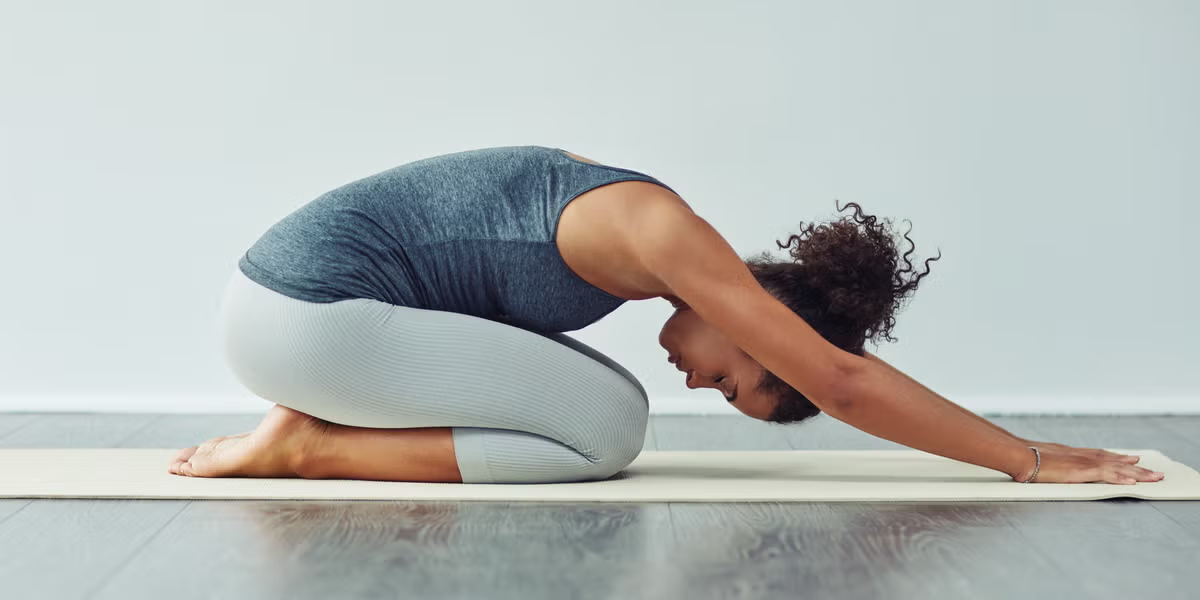
Child’s pose in yin yoga is held much longer than usual. Your knees are wide, big toes touching, and you fold forward with your arms extended. This gently stretches your hips, lower back, and shoulders. It’s often used as a resting pose between more intense stretches.
Sphinx and seal poses are gentle backbends done lying on your belly. In sphinx, you prop yourself up on your forearms. In seal, you straighten your arms. Both compress your lower back and stretch your abdominal area. These poses stimulate your spine in the opposite direction from all the forward folding we do in life.
Banana pose is a side stretch done lying on your back. You shift your hips to one side and then create a banana shape with your body, stretching your arms overhead. This targets your side body, including muscles between your ribs that rarely get stretched otherwise.
Twisted root combines a supine twist with a hip stretch. It’s more complex than it sounds, but it feels amazing. You’re working your IT band, outer hip, and getting a spinal twist all at once.
Savasana, or corpse pose, ends every yin yoga practice just like other yoga styles. But after holding intense poses for several minutes each, this final relaxation feels especially deep. Your body integrates all the work you’ve done, and your nervous system fully settles into rest mode.
Who Should Practice Yin Yoga
Yin yoga benefits almost everyone, but it’s especially valuable for certain groups of people.
Athletes and people with active lifestyles need yin yoga more than anyone. If you run, bike, do CrossFit, or play sports, you’re doing lots of yang activity. Your muscles are strong, but your connective tissue might be tight and restricted. Adding yin yoga to your routine helps prevent injury and improves your overall performance by maintaining healthy range of motion.
Office workers and anyone who sits a lot will find tremendous relief in yin yoga. Sitting shortens your hip flexors and tightens your hamstrings. It rounds your shoulders forward and compresses your spine. A regular yin practice counteracts all of this, helping you feel more open and comfortable in your body.
People dealing with stress, anxiety, or burnout often discover that yin yoga becomes their sanctuary. The slow pace and meditative quality naturally calm your nervous system. Unlike more active practices that can sometimes feel like another thing you have to achieve, yin yoga is about letting go and being rather than doing.
If you find traditional meditation difficult, yin yoga offers an accessible entry point. Having physical sensations to focus on makes it easier to stay present than sitting still with your eyes closed. Many people who “can’t meditate” find success with yin yoga.
People recovering from certain injuries may benefit from yin yoga, but this requires caution and ideally guidance from a physical therapist or experienced teacher. The gentle nature of yin can be therapeutic, but you need to know your limitations and modify appropriately.
However, yin yoga isn’t right for everyone or every situation. If you have hypermobility conditions like Ehlers-Danlos syndrome, the long passive stretches in yin yoga can actually cause problems. Hypermobile people need more stability work, not deeper stretching.
If you have acute inflammation or a recent injury, wait until you’ve healed before doing yin yoga in that area. The gentle stress we apply to tissues is healthy for normal tissue but can aggravate fresh injuries.
Pregnant women should work with a prenatal yoga teacher rather than doing general yin classes. Some poses need significant modifications during pregnancy, and hormone changes affect your flexibility in ways that require special attention.
If you’re dealing with severe osteoporosis, certain yin poses that involve spinal flexion might not be appropriate. Always check with your doctor if you have concerns about whether yin yoga is safe for you.
How to Start Your Yin Yoga Practice
Ready to try yin yoga? Here’s how to get started without feeling overwhelmed.
Begin with shorter holds. Even though traditional yin yoga poses are held for three to five minutes, there’s no rule that says you can’t start with one or two minutes. Give yourself permission to build up gradually. Your body needs time to adapt to this different way of stretching.
Props are your best friends in yin yoga. You’ll want to have blocks, blankets, and ideally a bolster. These aren’t crutches or signs that you’re not flexible enough. Props help you find that appropriate edge we talked about earlier. A block under your forehead in a forward fold or a blanket under your knees in dragon pose makes all the difference between suffering through a pose and actually benefiting from it.
Create a comfortable space for home practice. You don’t need a fancy yoga studio. Just find a quiet spot where you won’t be interrupted for 20 to 30 minutes. Dim the lights if you can. Maybe light a candle or play soft music. The environment matters in yin yoga because you’re trying to activate your relaxation response.
Start with two or three times per week. You don’t need to practice yin yoga every single day. In fact, your tissues need time to adapt to the work you’re doing. Practicing every other day gives your body time to respond and remodel.
The best time for yin yoga is usually evening. Your body is warmer and more flexible after moving around all day, plus the calming effects help prepare you for sleep. That said, morning yin can also be lovely if that fits your schedule better. Just be extra gentle in the morning when your body is stiffer.
Finding good resources matters. YouTube has thousands of free yin yoga classes. Look for teachers who explain the principles clearly and emphasize that everyone’s body is different. Sarah Powers, Bernie Clark, and Josh Summers are well-respected yin yoga teachers whose classes and content are excellent.
If you want to try studio classes, call ahead and ask about the teacher’s experience with yin yoga. Not all yoga teachers have trained specifically in yin, and having someone who understands the practice makes a big difference.
Many online platforms offer yin yoga classes too. Yoga International, Glo, and Alo Moves all have extensive yin yoga libraries. These let you practice at home with professional instruction.
Consider taking a workshop if one is available in your area. A two or three hour yin yoga workshop gives you much more time to understand the principles than a regular class. You can ask questions and get individualized guidance.
Common Mistakes in Yin Yoga
Even though yin yoga seems simple, people make some typical mistakes that limit their benefits or even cause problems.
The biggest mistake is pushing too deep into poses. Your ego might tell you to get your chest all the way to the floor or match what the teacher or someone else is doing. But in yin yoga, more intense doesn’t mean better. You want to feel sensation, but you should be able to breathe deeply and somewhat comfortably. If you’re grimacing or holding your breath, you’ve gone too far.
Tensing your muscles defeats the purpose of yin yoga. Check in with your body regularly during a pose. Are you gripping anywhere? Are your shoulders up by your ears? Are you clenching your jaw? The whole point is to relax your muscles so gravity can work on your deeper tissues. Scan your body and consciously release any tension you find.
Not using enough props is another common issue. Some people feel like using props means they’re not good at yoga. That’s completely backwards. Props help you find the right depth and stay comfortable enough to hold poses for several minutes. The person using six blankets and two bolsters is practicing more intelligently than the person suffering without support.
Comparing yourself to others robs you of the benefits. Your body is unique. Your bones are shaped differently than anyone else’s. Your history of injuries, activities, and genetics all affect what’s possible in your body. The person next to you might fold in half easily while you feel intense sensation with a small forward bend. Neither is better. You’re both exactly where you should be.
Skipping the settling in period is a mistake too. When you first come into a yin pose, give yourself 30 seconds or so to adjust, arrange props, and find your edge. Don’t just collapse into the deepest version immediately. Ease in, then stay still.
Ignoring actual pain signals can lead to injury. There’s a difference between the intense sensation of stretching and the sharp, bad feeling of pain. If something feels wrong, trust that feeling. Come out of the pose or adjust it. You should never feel pain in your joints. Sensation in muscles and surrounding tissues is normal. Pain that makes you catch your breath or feel sick is not.
Balancing Yin and Yang in Your Routine
One of the most valuable things about understanding yin yoga is learning to create balance in your overall fitness routine.
If you currently do lots of active exercise, adding yin yoga gives your body the recovery it needs. A good rule of thumb is to match your yin and yang practices. If you do three days of intense workouts, try to do at least two days of yin yoga.
You can also combine yin and yang in the same session. Some people like to do 30 minutes of vinyasa or strength training followed by 30 minutes of yin poses. This gives you the benefits of both approaches. You build strength and heat, then you cool down and stretch deeply.
Weekly schedule examples might look like this: Monday could be a yang practice like running or vinyasa. Tuesday might be yin yoga. Wednesday you could do strength training. Thursday is another yin practice. Friday is active again. Saturday might be a longer yin session or restorative yoga. Sunday could be a gentle walk or complete rest.
Seasonal adjustments make sense too. In summer when you have more natural energy, you might do more yang practices. In winter when your body wants to slow down, you might shift toward more yin. Listen to what your body needs rather than forcing the same routine year round.
Some days your body will tell you clearly what it needs. If you’re wired and anxious, yin yoga helps. If you’re feeling sluggish and unmotivated, a yang practice might serve you better. Learning to listen to these signals is part of developing a mature yoga practice.
The Mental Challenge of Yin Yoga
Here’s something people don’t always expect: yin yoga can be mentally harder than physical practices, even though it looks easy.
Our culture is obsessed with doing, achieving, and moving fast. We’re uncomfortable with stillness. When you first hold a yin yoga pose for five minutes, your mind will probably freak out a little. You’ll want to check your phone. You’ll remember 17 things you need to do later. You’ll wonder how much time is left. This is all completely normal.
The practice is learning to stay anyway. You observe your restless mind without judging it or acting on every impulse. This is meditation. You’re building the skill of being present with what is, even when it’s uncomfortable.
Physical discomfort in yin yoga also teaches you something valuable. Not all discomfort is an emergency that needs to be fixed immediately. Sometimes discomfort is just sensation. It’s information. Learning to breathe through it, observe it, and let it be there without panicking builds tremendous mental resilience that carries over into the rest of your life.
Emotions coming up during practice can be unsettling if you’re not expecting it. You might feel sad, angry, anxious, or just oddly emotional without knowing why. This is actually a sign that the practice is working. You’re releasing not just physical tension but emotional holding patterns too. Let yourself feel whatever comes up. Breathe through it. This is healing.
The boredom you might feel is worth examining too. Why is being still for a few minutes boring? What are you usually distracting yourself from? Yin yoga strips away all the distractions and asks you to just be with yourself. For many of us, that’s unfamiliar and uncomfortable at first. It gets easier with practice.
Final Thought
Yin yoga asks you to do something that goes against everything our world tells us: slow down, do less, be still. In a culture that celebrates busy and measures worth by productivity, choosing to lie on the floor and breathe for 30 minutes is actually pretty radical.
But here’s what makes yin yoga worth your time. It doesn’t just stretch your body. It teaches you how to be with yourself, how to sit with discomfort, how to find calm in the middle of chaos. These skills matter more than being able to touch your toes or do a perfect pose.
Your body needs the balance that yin yoga provides. If you’re always going, always doing, always pushing, you’re only using half of what makes you whole. The yin part, the quiet and restorative part, is just as important as the active part. Maybe even more important in our overstimulated world.
You don’t need to be flexible to start yin yoga. You don’t need fancy clothes or equipment. You just need a little space, some time, and a willingness to try something different. Start with one class or even just one pose held for three minutes. See how it feels. Notice what comes up. Give yourself permission to practice in a way that feels good rather than impressive.
The best part about yin yoga is that it meets you wherever you are. Stressed? It calms you. Tight? It opens you. Distracted? It centers you. Exhausted? It restores you. There’s no wrong way to practice as long as you’re listening to your body and staying safe.
So grab a couple of pillows, find a quiet corner, and try holding a simple forward fold for a few minutes. Put on some soft music. Light a candle if you want. Just be there with yourself. Your body has been waiting for this kind of attention. Give it the gift of time and stillness. That’s what yin yoga is really about.
About the Author